
- Plant Health Care
7 min read
Everything Rochester Homeowners Need to Know About Boxwood Moths
Boxwoods are one of the most widely used shrubs in Rochester landscapes. They anchor foundation plantings, frame entrywa...
Boxwoods are one of the most widely used shrubs in Rochester landscapes. They anchor foundation plantings, frame entryways, define garden beds, and create clean, evergreen structure year-round.
And many homeowners have invested years (even decades) into growing and shaping their boxwoods. The problem? An emerging invasive pest can threaten that investment: the boxwood moth.
Also commonly called the box tree moth, boxwood moth damage can escalate quickly, leading to defoliation, plant decline, and in severe cases, shrub loss.
Understanding how to identify early warning signs and when professional boxwood moth treatment is necessary is critical for homeowners throughout Rochester, NY, Monroe County, and surrounding communities.
If you're curious about boxwood moths, how to treat them, and how to prevent issues, here’s what you need to know.
Jump to:
What are Boxwood Moths & Why You Should Care
Early Signs of Boxwood Moth Damage
Is DIY Boxwood Moth Treatment Right For Your Landscape?
When to Act on Boxwood Moth Infestations
How We Protect Your Boxwoods at Trimline
FAQs About Box Tree Moths
Partnering with Trimline for Plant Health Care
Boxwood moths are an invasive insect species whose larval stage feeds aggressively on boxwood leaves and bark. While the adult moth itself does not directly damage your plants, its larvae – the box tree moth caterpillar – are highly destructive to your boxwoods.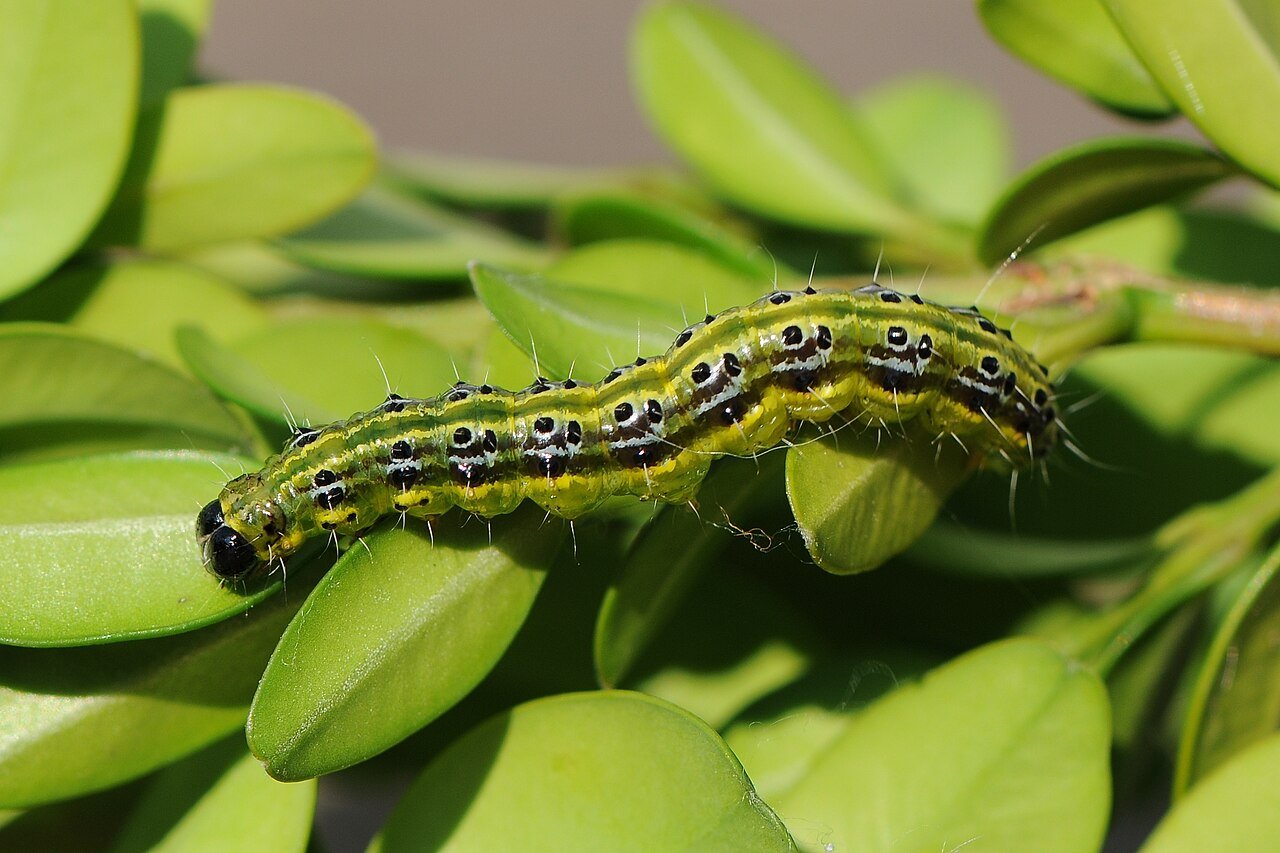
When left untreated, the caterpillars can consume:
Leaves
Tender stems
Even bark (in heavy infestations)
Because boxwoods are slow-growing evergreen shrubs, they don't rebound quickly from stress. Unlike some deciduous plants that can refoliate within a season, boxwoods may take years to recover – if they're able to recover at all.
Unchecked infestations can lead to rapid defoliation, interior thinning, browning and dieback, permanent structural damage, and at worst, full plant decline or death.
For many Rochester homeowners, boxwoods form the backbone of their landscape design. Losing mature hedges or established foundation plantings can significantly impact curb appeal, and unfortunately, full replacement costs can be substantial due to the high retail cost of boxwood plants.
That’s why early identification and properly timed boxwood moth treatment matter so much when protecting your investment.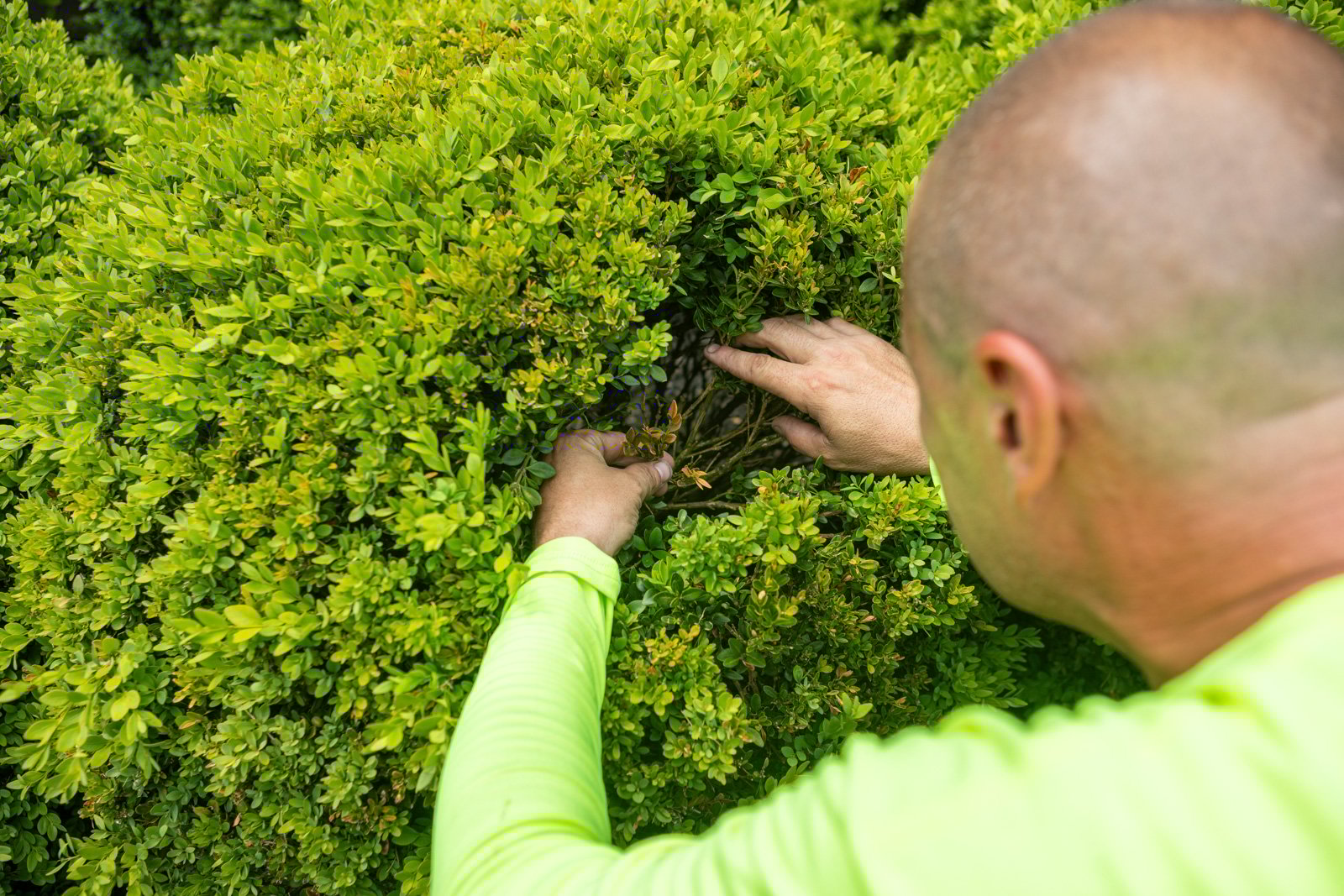
One of the most challenging aspects of box tree moth damage is that it often begins where homeowners can't easily see it – inside the shrub.
Many homeowners know it when they see it on the outside, but before your outer foliage turns brown (a tell-tale sign), feeding is typically occurring deep within the dense canopy and out of sight.
Here's what we recommend keeping an eye on so you can diagnose the issue early on.
The box tree moth caterpillar is green with black striping and small white markings. They hide within the shrub's interior, feeding under the radar until populations build. If you start to see these moth caterpillars, it’s time to take action.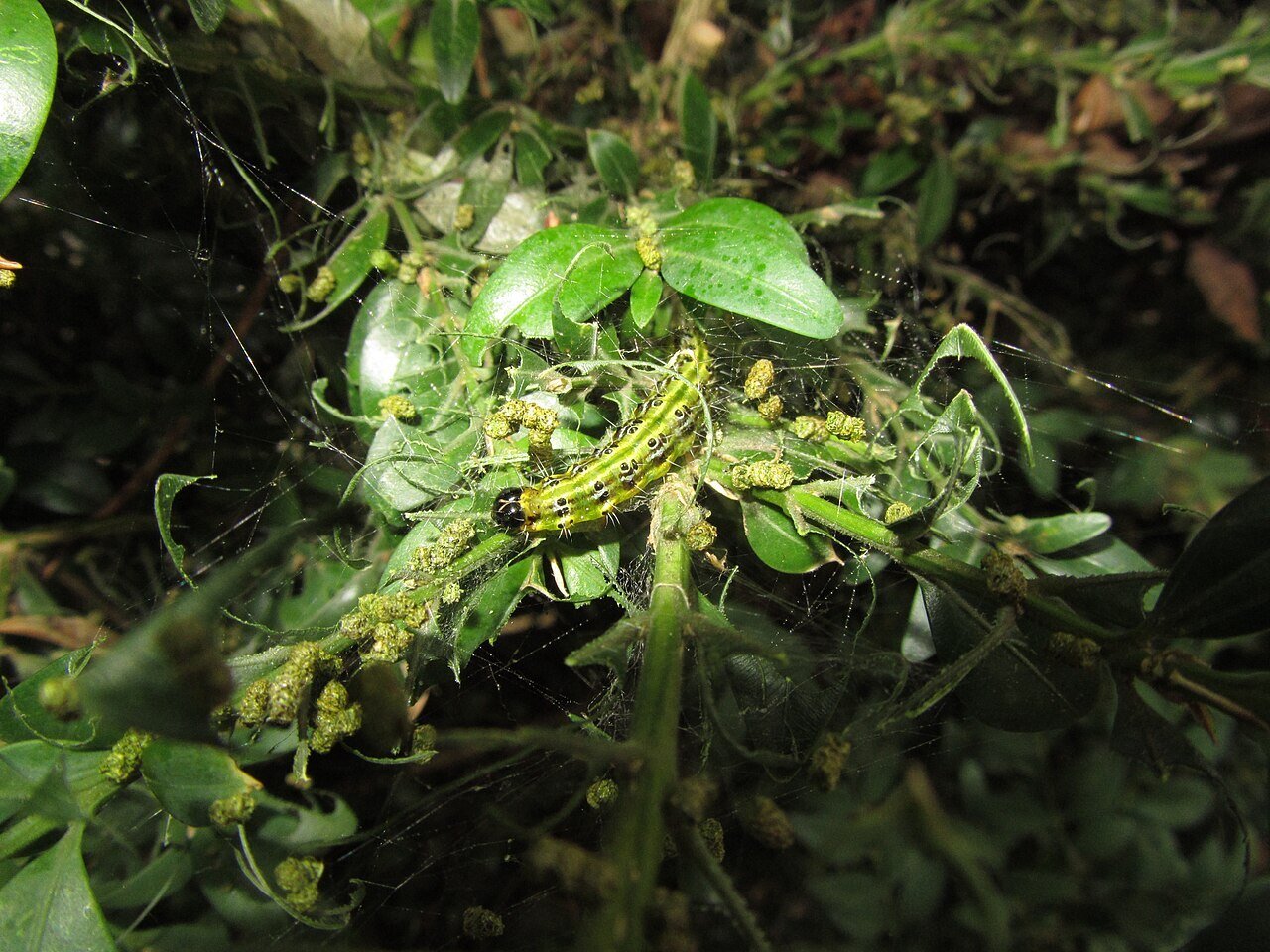
Light webbing between leaves or along branch tips is often one of the earliest visible indicators.
Leaves may appear partially eaten, leaving behind only veins. If it looks like something gnawed on your leaves or left their skeletons behind, have your boxwoods inspected promptly.
Foliage may begin to discolor from the inside out – that's an early sign that feeding has been ongoing, and it's time to get your boxwoods looked at.
Box tree moth eggs are tiny, pale, and typically laid on the undersides of leaves. Because they are so small, they are easy to overlook during casual inspection.
By the time widespread browning appears on the outer layer of the shrub, significant feeding damage may already have occurred - that's why early detection is so critical.
Proper boxwood moth treatment depends heavily on understanding the insect’s life cycle. As a general rule, boxwood moths move through four life stages:
Egg
Caterpillar (larval stage)
Pupa
Adult moth
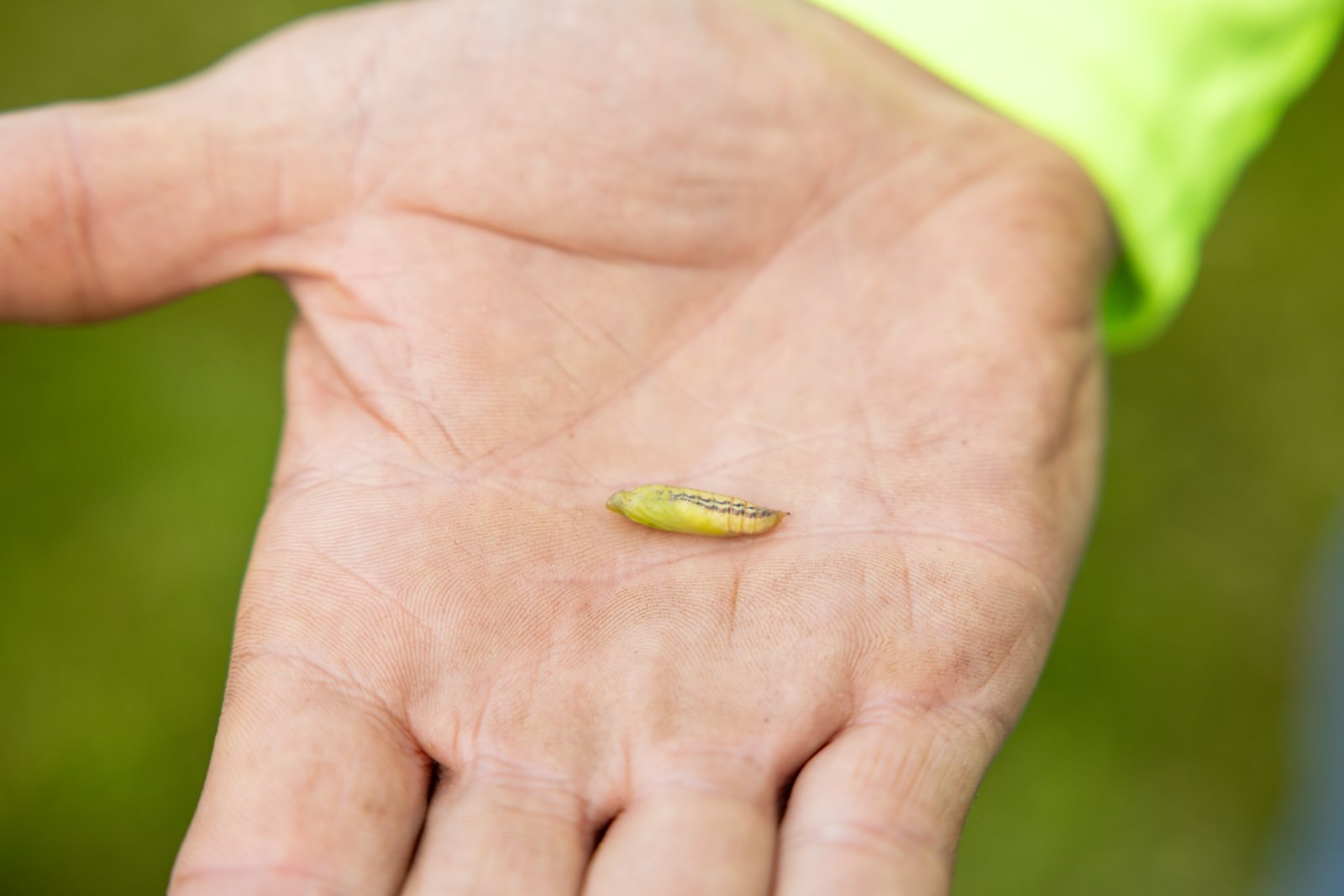 The caterpillar stage is when the damage occurs, but thankfully, it is also when box tree moth spray applications are most effective. Complicating matters even more, though, there can be multiple generations in a single growing season.
That means:
Eggs hatch
Caterpillars feed
Pupae develop
New adults emerge
The cycle repeats
If a specific treatment window is missed, populations can rebound rapidly. When talking with our team the other day, William Dachille reminded me that success comes down to timing and monitoring.
"If you’re only reacting after heavy damage appears, you’re already behind. Proactive observation allows us to treat during the most vulnerable stage, when caterpillars are actively feeding.”
This is why a professional plant health care program in your area (like in Rochester, NY, Monroe County, and surrounding communities) is so important for long-term control and prevention.
At first glance, a few chewed leaves may not seem all that alarming. But box tree moth damage can escalate quickly and, when it does, the cost of resolving the infestation can add up.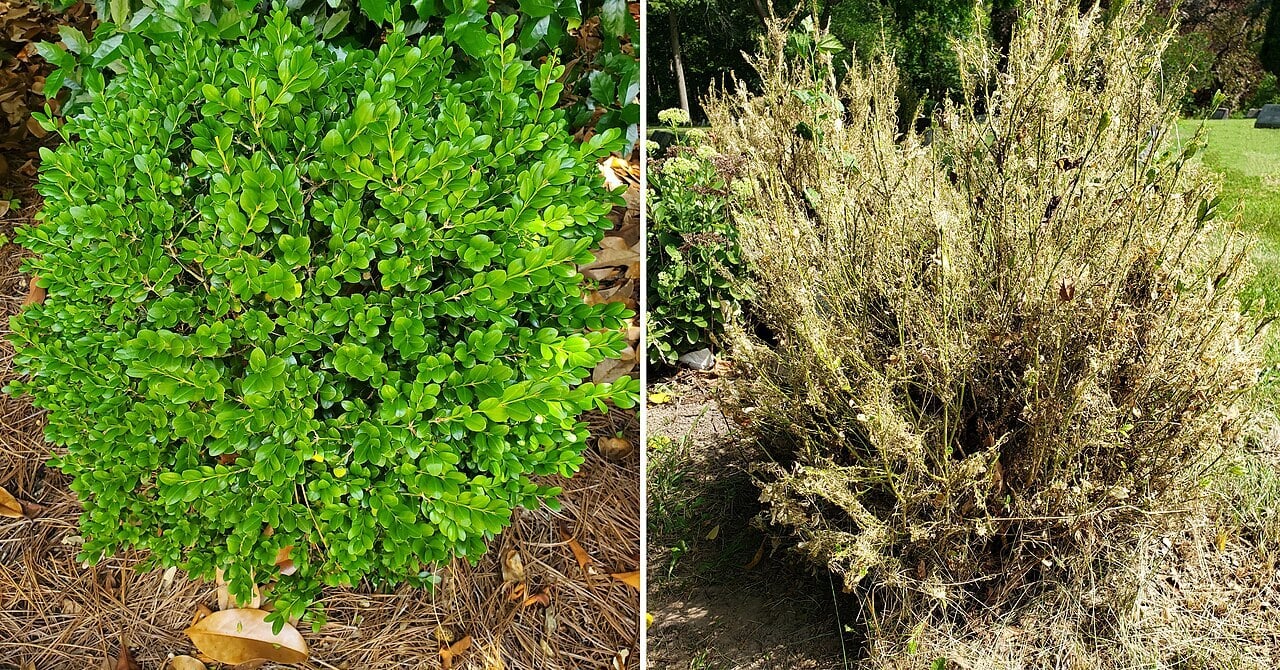
In severe infestations, caterpillars can strip entire shrubs in a matter of weeks. The risks include:
Complete defoliation
Branch dieback
Bark stripping
Increased susceptibility to disease
Permanent thinning
Shrub loss
Because boxwoods grow slowly, replacing mature plants means starting over — both visually and financially.
Additionally, boxwoods are very popular in Rochester. Many Rochester homes (or homes in the surrounding counties) rely on boxwoods for formal hedges, privacy borders, foundation structure, and landscape symmetry.
If a homeowner leans on boxwoods for a large part of their landscape, the damage from an infestation disrupts more than just plant health; it throws a wrench in design integrity.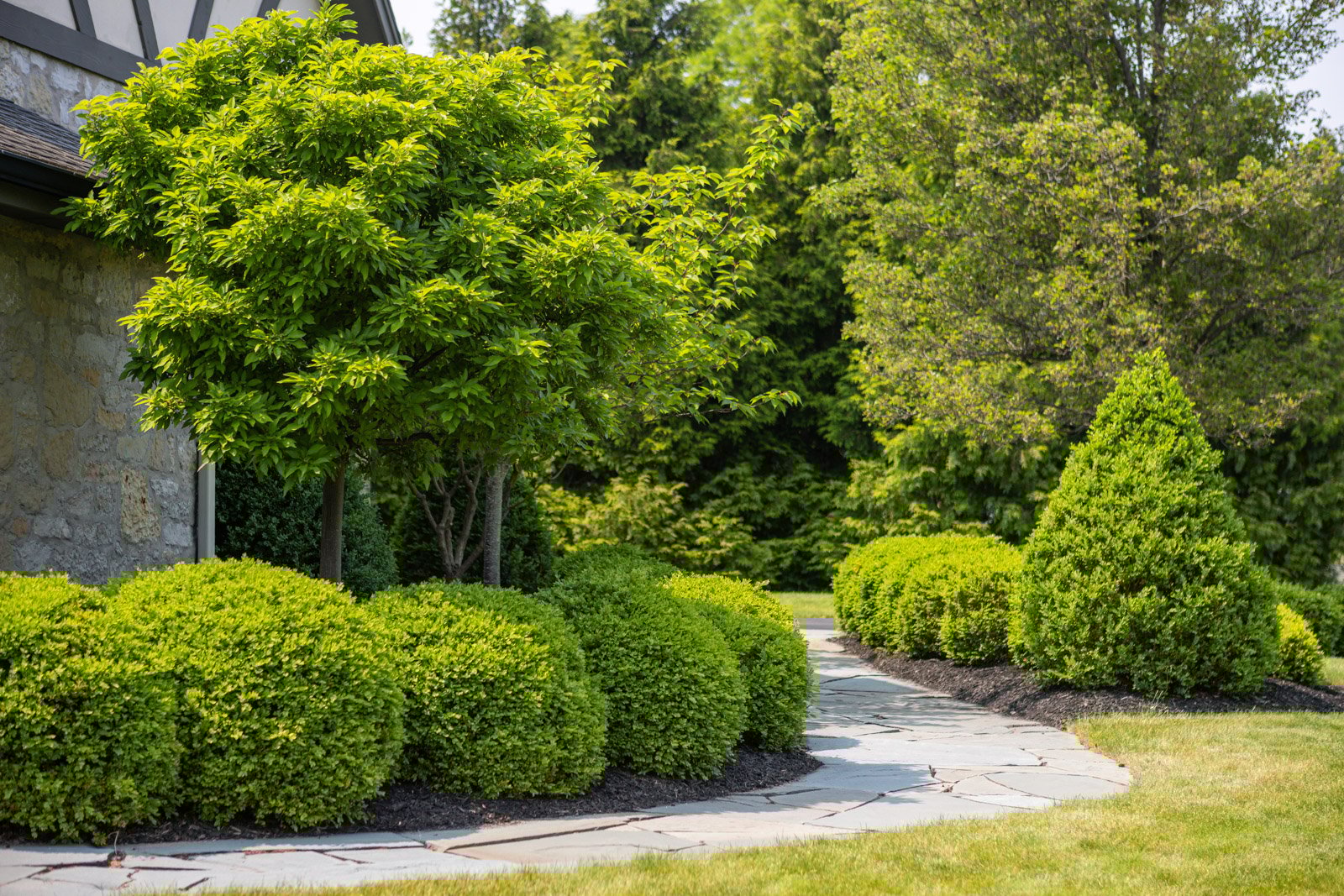
It’s common for homeowners to search for box tree moth spray or boxwood moth spray solutions as soon as they suspect damage. And while some DIY products are available and there is a possibility you can manage some infestations yourself, there are several limitations you need to be aware of before you reach for the spray.
Just like DIY lawn care, there are pros, cons, and considerations to know before you tackle infestations yourself.
Caterpillars hide deep inside dense boxwoods. Surface spraying often fails to penetrate far enough into the shrub to reach feeding larvae. You may think you've gone deep enough, when in reality, your DIY solution didn't reach the dense interior where the caterpillars are.
Treatments are most effective during specific life stages. Without proper monitoring, it’s easy to mistime applications. A professional can help you determine these stages and provide proper treatment depending on what cycle your boxwood moths are in.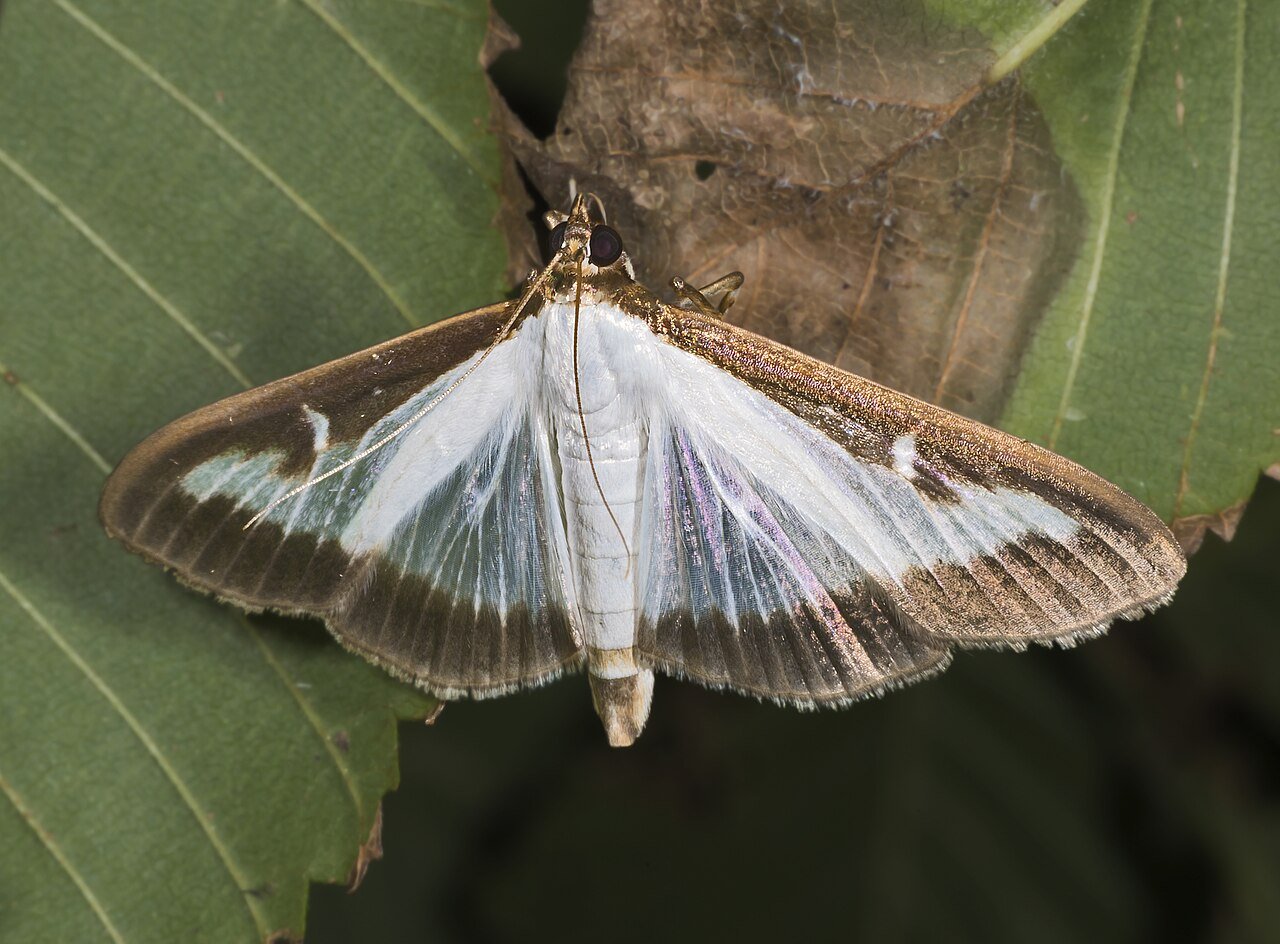
Over-the-counter products may reduce active populations temporarily but often fail to address repeated generations. You could solve the problem for the moment, only to deal with the same problem shortly after - creating a cycle of recurring treatments.
Improper applications can stress already weakened shrubs or harm beneficial insects in your landscape.
While DIY boxwood moth treatment may slow damage, it rarely provides complete control during established infestations.
As you might expect, timing is everything with box tree moth control. Because multiple generations can occur each season, effective treatment requires:
Monitoring for egg hatch
Identifying active caterpillar feeding
Applying box tree moth spray at the correct interval
Rechecking shrubs throughout the season
Waiting until heavy defoliation appears reduces treatment effectiveness and increases plant stress.
That's why professional treatment – and hiring the right professionals to do it – is so important. The right kind of treatment focuses on proactive monitoring and cycle timing rather than reactive spraying when symptoms occur.
When it comes to our professional boxwood moth treatments, we always go above and beyond a one-time spray. Trimline's effective strategy includes monitoring, targeted applications, preventive treatments, and plant health support to manage, prevent, and protect your plants.
Regular inspection allows for early detection of eggs and caterpillars before damage becomes severe.
Applications are timed to coincide with active caterpillar stages for maximum effectiveness.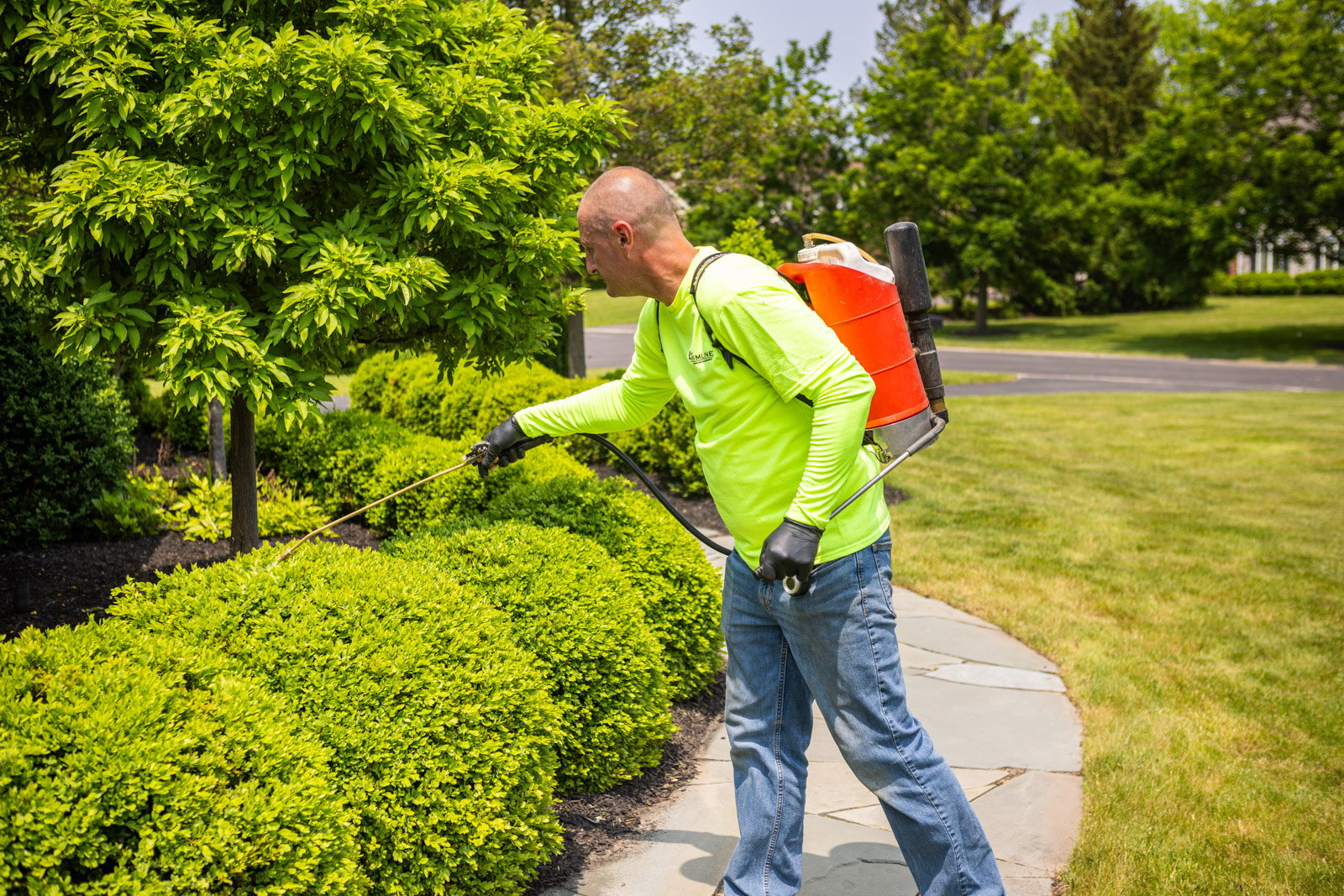
Preventative measures help reduce future outbreaks and minimize repeated defoliation cycles.
Healthy shrubs are better equipped to withstand stress. Integrated plant health care programs strengthen overall resilience.
Trimline approaches boxwood moth treatment as part of a broader plant health care program. We don't look at this as a one-time fix – instead, it's all about longevity and protecting your investment for years to come.
Our comprehensive plant-health approach includes elements like:
Ongoing seasonal monitoring
Timed boxwood moth spray applications
Preventative strategies
Careful product selection
Continued observation throughout the growing season
By combining prevention, proper timing, and consistent evaluation, we help homeowners reduce long-term damage and protect mature shrubs. Rather than waiting for severe box tree moth damage to appear, our strategy focuses on early intervention and sustained control. A proactive approach can make a measurable difference in the health and lifespan of your boxwoods.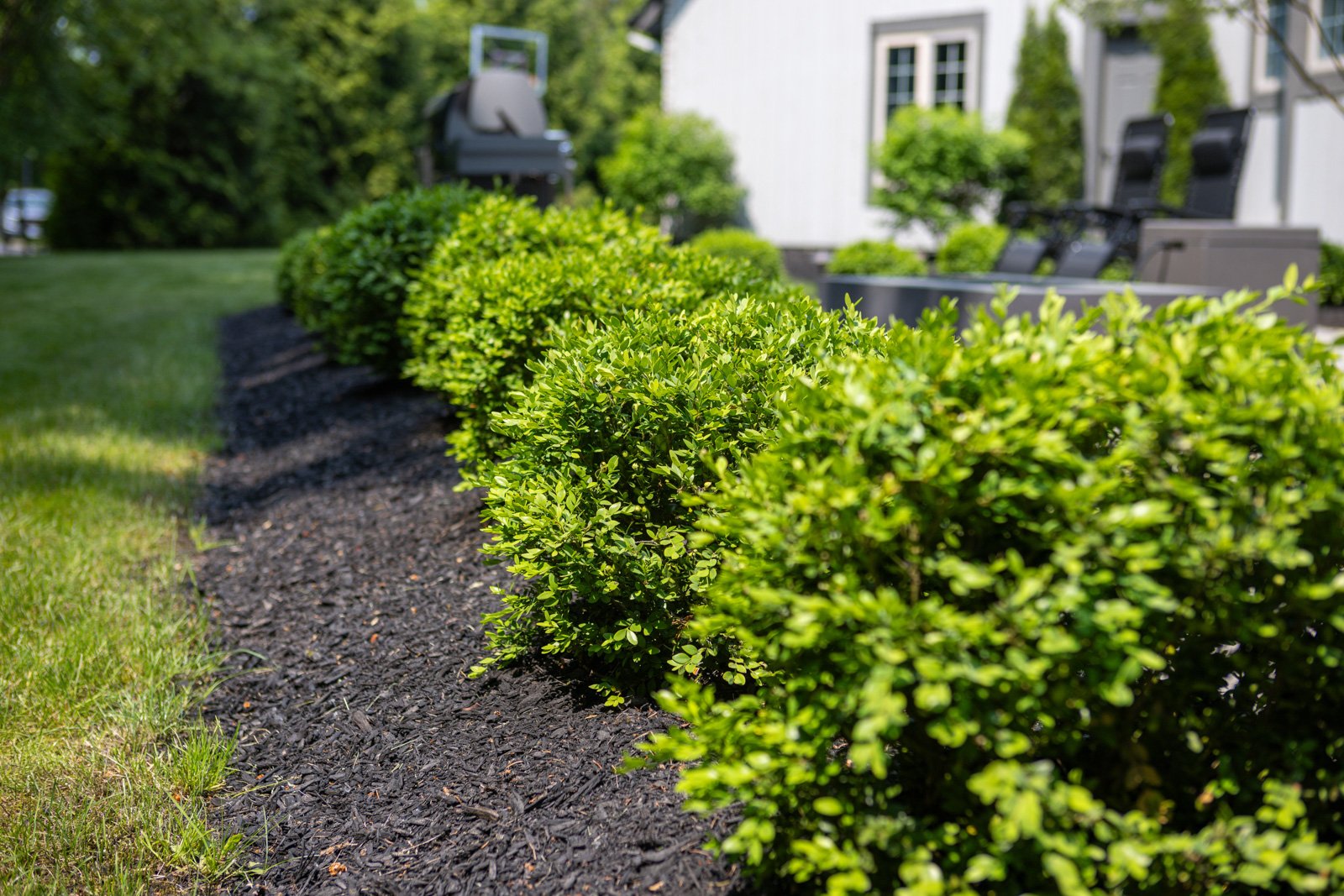
For homeowners in Rochester, NY, Monroe County, and surrounding communities, that proactive approach makes a measurable difference.
Absolutely. Boxwood moths are an emerging, invasive pest in the Rochester area that we've seen throughout the years. As populations establish locally, proactive monitoring and early intervention are becoming increasingly important for homeowners with boxwoods.
Boxwood tree moth damage usually begins inside the shrub, before it moves to the outside (where most homeowners start to notice). Early signs include webbing between leaves, green caterpillars with black stripes, chewed or skeletonized foliage, interior browning, and thinning canopies. Severe infestations can result in widespread defoliation and plant decline (or even plant death).
Box tree moth eggs are small, pale, and typically laid on the undersides of leaves. They are difficult to detect without close inspection, which is why infestations can build before being noticed.
We use a plant health care approach that includes monitoring, timed box tree moth spray applications during active caterpillar stages, preventative treatments to reduce future outbreaks, and ongoing evaluation throughout the growing season.
Usually, no. Because there can be multiple generations per season, effective control often requires monitoring and potentially multiple treatments during active periods. If a professional sprays your plants one time and then moves on, it's likely not an effective treatment – you need consistent monitoring with intermittent spraying and service to ensure the infestation is taken care of.
Box tree moth damage can move quickly, but with early detection, proper timing, and professional boxwood moth treatment, it can be managed effectively.
If you’ve noticed signs of boxwood moth caterpillars, webbing, or interior browning, or if you want to proactively protect your shrubs, we provide expert plant health care in Rochester, NY, Monroe County, and the other surrounding communities.
Your boxwoods are an investment in your home’s beauty and structure. Protect them with a strategy designed for our region before minor damage becomes major loss. Fill out our free quote form today and get started with a plant health assessment.
Image Sources: box tree caterpillar, box tree moth caterpillar webbing, boxwood moth damage, box tree moth